What is Eating Disorder Recovery Coaching?

Coaching is a supportive, goal-oriented process that helps individuals identify where they are, where they want to be, and the steps to get there. While therapy often focuses on understanding underlying mental health concerns and past experiences, coaching emphasizes present-moment awareness, actionable goals, and the behaviors that support ongoing recovery and growth. A coach provides guidance, accountability, and practical tools to help clients build self-awareness, develop skills, and move forward with confidence.
The purpose of my work is to offer a safe, genuine, non-judgmental space where clients can explore challenges, define their goals, and create meaningful change. My role is to empower and equip individuals with strategies that promote confidence, resilience, and lasting progress in recovery!
Frequently Asked Questions
-
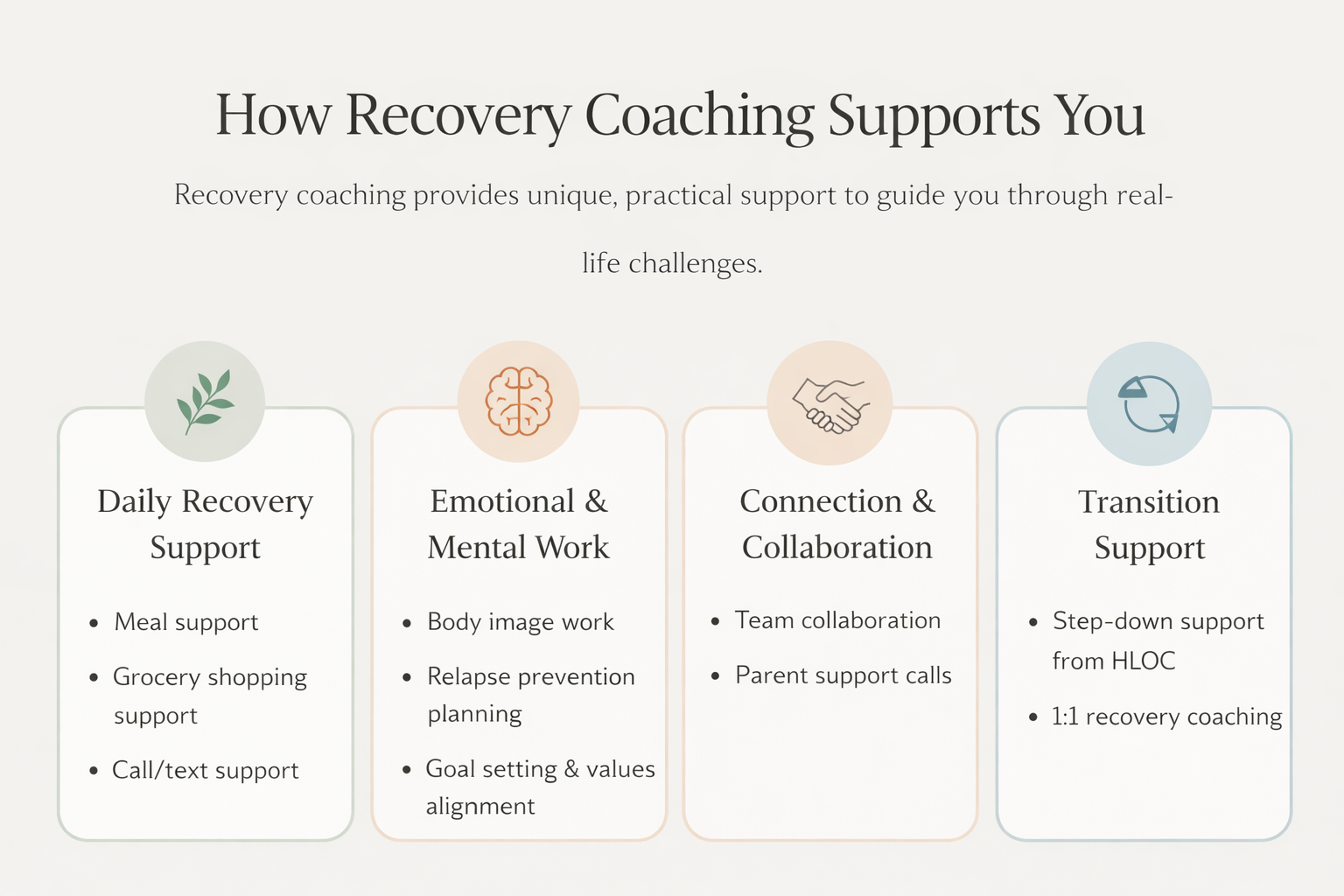
An eating disorder recovery coach provides practical, real-life support to help clients put recovery skills into action. Coaching can include meal support, body image work, grocery shopping or restaurant exposures, goal setting, accountability, coping skills, and relapse prevention. A recovery coach can also collaborate with therapists, dietitians, and other treatment providers to support a client’s overall care. Recovery coaching complements traditional treatment by helping clients navigate real life challenges as they come up and practice choosing recovery in their everyday lives.
-
Therapy often focuses on understanding and treating the deeper emotional and psychological factors connected to an eating disorder, while recovery coaching is more action-oriented and focused on applying recovery skills to everyday life. A recovery coach can help with things like meal support, accountability, coping with urges, navigating challenging situations, and working toward recovery goals in real time. Coaching is designed to complement therapy and other treatment, giving clients additional support as they practice what they’re learning in their daily lives.
-
Recovery coaching is for someone who is ready to play an active role in their recovery and wants more support making forward progress! You may know what you need to do but feel stuck putting it into practice, want more accountability between appointments, or need support navigating the challenges that come up in everyday life. Coaching can meet you wherever you are in recovery and help you take meaningful, realistic steps toward the life you want outside of your eating disorder.
-
I work with teens and adults of all genders navigating eating disorders and disordered eating at different stages of recovery. I have experience supporting clients with anorexia, bulimia, binge eating disorder, ARFID, and other eating and body image concerns. Every client’s experience with recovery looks different, so coaching is individualized based on where you are, what you’re working toward, and where you could use more support.
-
I offer support that is personalized to what you need most in your recovery. This can include one-on-one coaching, meal and snack support, grocery shopping and restaurant challenges, body image work, goal setting, accountability, coping with urges, relapse prevention, and support navigating real-life situations as they come up. I also offer text support between sessions for clients who may benefit from additional encouragement and accountability throughout the week.
-
Yes! I believe recovery is strongest when everyone on your treatment team is working together. With your permission, I can collaborate with your therapist, dietitian, physician, or other treatment providers to share relevant updates, discuss goals, and make sure the support you’re receiving through coaching aligns with your overall treatment. Coaching is meant to be an added layer of support, and collaboration helps us provide more consistent and connected care.
-
I am a Certified Eating Disorder Recovery Coach through the Carolyn Costin Institute (CCI), where I received specialized training and supervised coaching experience supporting clients in recovery. I also have a Bachelor of Arts in Psychology and a Bachelor of Science in Education from Southern Methodist University. Along with my education and training, I bring my own lived experience with eating disorder recovery into the work I do. Having been on the other side of recovery gives me a perspective that is both personal and practical, and it’s a big part of why I care so deeply about helping others build a life beyond their eating disorder.
-
Coaching starts with getting to know you, where you are in your recovery, and what you’re hoping to get out of our work together. From there, we’ll identify the areas where you could use more support and create goals that feel meaningful and realistic for you! Sessions are collaborative and can look different week to week depending on what’s coming up in your recovery. We may work through a specific challenge, practice recovery skills, set goals for the week ahead, or get out into the real world for meal support or an exposure. The goal is always to make our time together useful, personal, and relevant to what you’re actually navigating!
-
I don’t believe recovery support should look exactly the same for everyone. I create personalized coaching plans based on who you are, what matters to you, and where you need the most support. My approach prioritizes values work, motivation, honesty, accountability, and relatability while creating a judgment-free space where you can be open about what you’re actually struggling with. I want our work together to feel genuine, collaborative, and meaningful to your life. Above all, I want you to feel like you have someone in your corner who understands recovery and is ready to help you keep moving forward.
-
Both! While I’m based in Dallas, Texas, I work virtually with clients nationwide. Virtual coaching allows us to meet consistently and incorporate many of the same forms of recovery support, no matter where you’re located.
-
Recovery looks different for everyone, so there isn’t one specific outcome or timeline I can promise. Through coaching, we’ll work toward meaningful progress in the areas that matter most to you. That can include building confidence around food, strengthening recovery skills, increasing accountability, challenging eating disorder behaviors, improving body image, or feeling more present and engaged in your life. My goal is to help you build the skills, confidence, and consistency to keep choosing recovery and create a life that feels bigger than your eating disorder.